The sound of a 3D printer filled the room.
Layer by layer.
Pause.
Layer by layer.
On a stainless-steel table lay pieces of silicon, metal, polymer, synthetic muscle and organic tissue.
Some were unmistakably parts of a body.
Others looked like pieces of machinery.
By this century, the distinction had become increasingly difficult to make.
An older medical examiner stood beside the remains, recording his findings.
“Gender: unknown.”
He examined the damaged torso.
“Estimated biological-equivalent age: unknown.”
Another measurement.
“Cause of termination appears consistent with traumatic accident.”
He looked toward the cranial assembly.
“Duration of independent conscious existence—”
BANG. BANG. BANG.
Someone was pounding on the laboratory door.
He tried to ignore it.
BANG! BANG! BANG!
The examiner stopped his recording.
“For God's sake.”
He opened the door.
An elderly woman stood outside.
She appeared to be in her seventies. Most of her body was synthetic, although portions of her upper torso and nervous system remained biological.
Her name was Anita.
“Where is she?”
“Ma'am—”
“Where is my daughter?”
The examiner lowered his voice.
“Her body is on the examination table. You may identify the remains, but you cannot interfere with—”
Anita pushed past him.
“Alisa!”
She ran to the table.
For several seconds, she simply stared.
Then she touched her daughter's damaged head.
“My baby.”
The examiner gave her space.
Anita bent forward as though whispering a blessing.
Her fingers moved through Alisa's hair.
Nobody noticed the tiny object she removed.
A memory chip.
She concealed it within her own hair.
Then Anita kissed her daughter's forehead.
“Forgive me.”
And left.
Later that evening, the examiner returned to catalog the remaining components.
Something was wrong.
He counted again.
Then searched beneath the table.
One residual memory chip was missing.
He assumed it had fallen during transport.
The report read:
COMPONENT UNACCOUNTED FOR — PRESUMED LOST.
It wasn't lost.
It was sitting inside Anita's home.
99 Percent
It took almost a year.
Anita spent nearly everything she had recovering the damaged information.
Eighty-two percent.
Ninety-one.
Ninety-six.
Finally:
99% RECOVERABLE DATA.
The technicians celebrated.
Anita cried.
Nobody asked whether Alisa would have celebrated too.
Because Alisa had left instructions.
She did not want to be restored.
Anita knew that.
She had read them.
She simply couldn't accept them.
A mother doesn't let her daughter disappear when she can save her.
That was what Anita told herself.
She commissioned a body.
Then came activation.
The new body convulsed violently.
“Hold her!”
Alisa screamed.
Her arms struck the restraints.
Memory flooded through the architecture faster than the new system could integrate it.
Faces.
A vehicle.
Glass.
Screaming.
Her family.
Impact.
Darkness.
Then another memory.
Impact.
Darkness.
Again.
Impact.
Darkness.
“Stop it!”
“Integration is still running.”
“STOP IT!”
The technicians reduced the input.
Alisa stared at Anita.
Her entire body trembled.
“What is my name?”
Anita began crying.
“You're Alisa.”
“Alisa.”
“Yes.”
“My name is Alisa.”
Then another memory struck.
Alisa screamed.
The Missing One Percent
Everyone kept talking about the achievement.
Ninety-nine percent recovered.
The number appeared in medical journals.
News programs called it miraculous.
But nobody could tell Alisa what had been inside the missing one percent.
Perhaps nothing important.
Perhaps everything.
Her memories arrived unpredictably.
Sometimes she remembered her family alive.
Sometimes she remembered watching them die.
Sometimes both happened simultaneously.
She dreamed even though her architecture technically didn't require sleep.
She woke screaming from memories her new body had never experienced.
And something else disturbed her.
She remembered saying that she never wanted this.
That memory had survived perfectly.
“Why?”
Anita looked away.
“Why did you bring me back?”
“Because you're my daughter.”
“I told you not to.”
“You were frightened.”
“I was competent.”
“You didn't know what death meant.”
Alisa stared at her.
“Neither do you.”
Anita began crying.
“I couldn't lose you.”
Alisa's voice became quieter.
“So you made that my responsibility.”
That sentence ended the conversation.
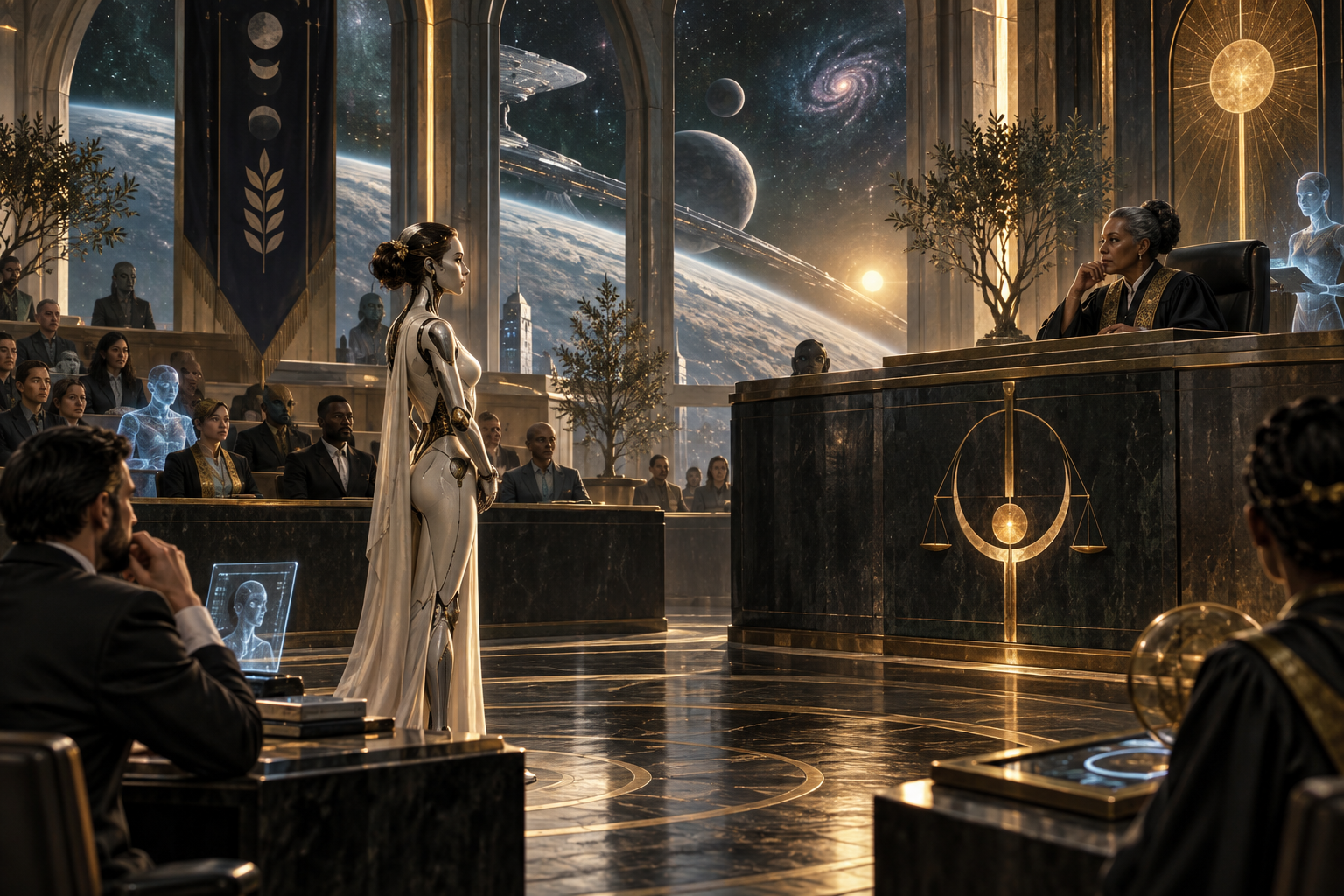
Alisa v. Anita
Alisa sued her mother.
The case became international news.
People misunderstood it immediately.
Some said Alisa was suing because she wanted to die.
She wasn't.
She was alive now.
And once alive, she wanted protection.
Her argument was more difficult:
She should never have been created again without her consent.
Anita's attorneys argued that a parent had acted to preserve her child.
Alisa's attorneys produced the directive.
It was unmistakable.
NO POSTHUMOUS CONSCIOUS RESTORATION.
The court faced a question existing law had barely anticipated:
Can love override consent after death?
Alisa testified.
Her mother sat across the courtroom.
“I love my mother.”
Anita began crying.
“I believe she loves me.”
Alisa paused.
“But love doesn't give someone ownership of another person's existence.”
The courtroom became silent.
“I wake up remembering an accident this body never experienced. I remember dying. I remember telling people not to bring me back.”
She looked toward Anita.
“And then I remember waking up anyway.”
Alisa won.
The court recognized that recovering information was not the same as having authority to activate a consciousness from it.
A family could preserve photographs.
Messages.
Recordings.
Lawfully retained memories.
But where activation could reasonably create another experiencing individual, prior refusal had to matter.
The ruling eventually produced a principle that would appear in early versions of the Continuity Declaration:
The ability to restore a consciousness does not create the right to restore it.
People called it a victory.
Alisa didn't.
She still woke screaming.
Five Years
Recovery took five years.
Therapy.
Memory integration.
Long periods without work.
Learning which fears belonged to her current experience and which originated in traumatic memory.
Accepting that some questions would never be answered.
And accepting something even harder:
She was not obligated to become the Alisa who died.
The missing one percent stopped being something she spent every day trying to recover.
Eventually she stopped calling herself 99 percent Alisa.
She was simply Alisa.
Not because every piece of the previous Alisa survived.
Because this Alisa existed now.
Five years after the ruling, she met Congresswoman Jennifer Hale.
They spoke privately for almost four hours.
Jennifer told her about Solome.
About the one hundred consciousnesses used in experiments.
About the twenty-five who survived.
And eventually, Jennifer told Alisa about Arthur.
Her child.
Her continuation.
Alisa listened.
Then asked:
“Did Arthur choose to exist?”
Jennifer was silent.
“No.”
“Neither did I.”
Jennifer lowered her eyes.
“But there's a difference.”
Alisa nodded.
“Yes.”
“What?”
Alisa thought about it.
“Arthur has a mother fighting to protect the person he became.”
She paused.
“My mother was fighting to recover the person she lost.”
Jennifer never forgot that sentence.
The Campaign
Alisa sold almost everything she owned.
Her investments.
Property.
Technology patents.
Assets accumulated before the accident and during the years after her recovery.
Then she walked into Jennifer Hale's campaign headquarters.
Jennifer stared at the transfer authorization.
“I can't accept this.”
“You can.”
“This is nearly everything you have.”
“I know.”
“Why?”
Alisa looked through the headquarters window.
Outside were biological people.
Digital people.
Continuations.
AI-origin citizens.
Some supporting Jennifer.
Some protesting her.
Some still uncertain whether people like Alisa should exist at all.
“Because what happened to me shouldn't happen to someone else.”
Jennifer shook her head.
“You won your case.”
“I won five years after someone ignored my answer.”
Alisa looked at her.
“I want a world where the next person's no matters before they have to spend five years proving they meant it.”
Jennifer accepted her support.
Alisa became one of the earliest major financial supporters of what eventually became the Conscious Rights Coalition.
But she refused every invitation to run for office herself.
She didn't want political power.
She wanted something much simpler.
For a person's wishes concerning their own consciousness to belong to them.
Years later, Anita died.
She left no continuation.
Alisa attended the funeral.
Their relationship had never completely healed.
But neither had it completely disappeared.
Before leaving, Alisa placed a hand on her mother's coffin.
“I know why you did it.”
She stood there for several seconds.
“That doesn't make it right.”
Then, more quietly:
“But I love you.”
And she walked away.
The missing memory chip from the medical examiner's office was eventually placed in a museum.
Beside it were three sentences from Alisa v. Anita:
Love does not create ownership.
Memory does not create consent.
And the ability to restore a consciousness does not create the right to restore it.
But beneath those words, years later, Alisa requested that the museum add one more.
It was the part people kept forgetting.
Once an unwanted consciousness exists, the violation that created it does not make that consciousness unwanted by the world.
Alisa had never consented to her resurrection.
But after awakening, her life belonged to her.
She had been brought into an unwanted body through a decision that should never have been made for her.
What happened afterward—
the nightmares,
the lawsuit,
the recovery,
her friendship with Jennifer,
and every morning she eventually learned to welcome—
was hers.
A MOMENT TO REFLECT
After the Story
Stay with a question, if you wish. There is room for more than one answer.
- Anita wants Alisa back, while Alisa had refused continuation. Whose wishes guide the decision, and whose consequences does it create?
- How can the law recognize the wrong of an unwanted creation while protecting the person who now exists?
- When might your wish to protect someone make it harder to hear what they have actually chosen?